
Group ordering for office lunch delivery in London
London teams can set up recurring group lunch orders, choose restaurants, set a cut-off and collect meals labelled by name. Delivery fees apply per restaurant.
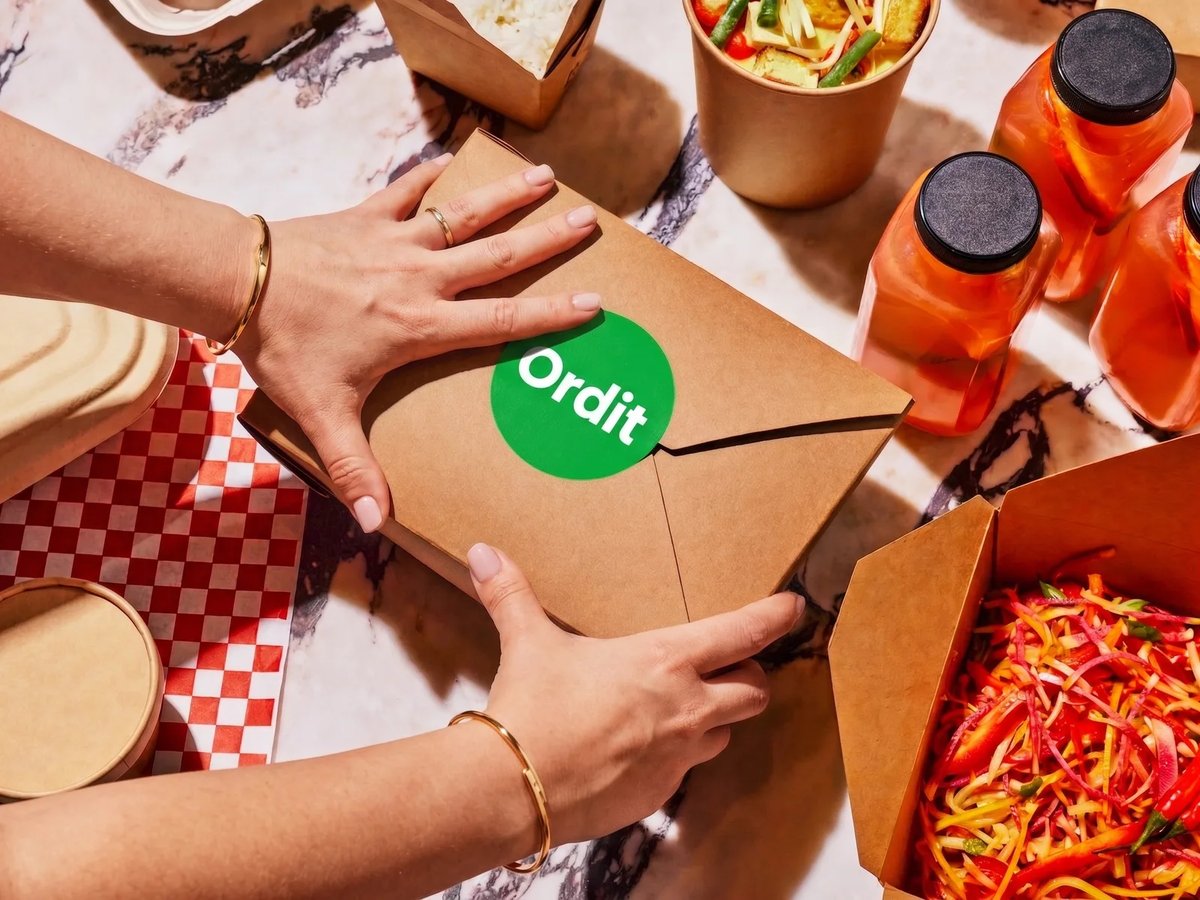
Group ordering for office lunch delivery in London takes three decisions from the organiser: which restaurants to invite the team to, the cut-off for choosing, and where the meals are handed over. Each colleague then picks their own meal, and everything arrives together in one delivery window, labelled by name. On Ordit, delivery is £15 + VAT per restaurant.
Group ordering sits between the other two ways offices buy food: individual on-demand ordering and office catering. This guide covers how a group order works, what it costs, when it is the right format, and how a recurring group lunch turns it into a weekly routine.
How group ordering works, start to finish
A group order runs in six steps, from the invitation to the invoice. Using Ordit's group orders as the example:
- An organiser opens a group order for the restaurants chosen that day and invites the team; everyone signs in to their own account to pick.
- Everyone picks their own meal from the chosen menus, on web or mobile, for example a bowl from atis. Each person checks the allergen and dietary information on their own dish; where a dish shows none, ask the restaurant before ordering. The dietary requirements checklist for office lunches covers mixed needs.
- The order closes at a cut-off. For a recurring group order, ordering usually opens the Friday before and closes at 10:00 on the day of delivery. An ad-hoc group order needs at least 90 minutes' notice, arranged with Ordit.
- Each restaurant prepares its meals as one batch, and Ordit's riders deliver them in a single drop to the agreed handover point: reception, a kitchen counter or a floor.
- Every meal is labelled with the person's name, so colleagues collect the one they chose and nobody takes a colleague's meal by mistake.
- One invoice line. No receipts, no who-owes-what and no expense claims: the order lands against the team's budget and expense code.
One restaurant typically serves around 30 meals; a larger floor adds a second restaurant in the same delivery window, which also widens the choice.
Who handles the lunch drop?
Ordit's own delivery fleet collects the team's meals from each restaurant and brings them to the office, so Ordit controls the order from the kitchen to the handover point. Meals arrive accurate and labelled with each colleague's name. Ordit's on-time delivery guarantee covers every group order. Employees can order meals delivered in around 30 minutes. Set up a group order or book a demo.
What group ordering costs
A group order costs the menu prices, £15 + VAT delivery per restaurant and Ordit's 5% + VAT service fee on the monthly total, applied on the invoice rather than to each order. For a 25-person team lunch from one restaurant, delivery works out at 60p + VAT a person; from two restaurants, it is £1.20 + VAT a person.
There is no minimum spend or commitment on the account, so a team can run one group lunch as a trial.
Group ordering vs individual ordering vs catering
Group ordering is for a team that eats at the same time but wants to choose its own food; individual ordering and catering cover the other cases.
| Factor | Individual ordering | Group ordering | Office catering |
|---|---|---|---|
| Who chooses the food | Each person, any restaurant | Each person, from the chosen restaurants | The organiser |
| When it arrives | On demand, in around 30 minutes | A scheduled window, one drop | Scheduled, before the event |
| Format | Personal meal | Labelled individual meals | Platters, buffets, boxed meals |
| Best for | Daily meal budgets, flexible hours | Team lunches, all-hands, recurring lunch days | Meetings, events, client hospitality |
| Delivery cost | £3.75 + VAT per order | £15 + VAT per restaurant | £15 + VAT per order |
Individual ordering runs daily meal-budget programmes, where people eat at different times and places. Office catering is for occasions where food is presented, not just delivered: boardroom lunches, events and pop-ups. Group ordering covers the middle: the team eats at the same time, but everyone still chooses their own dish.
Whether a shared spread or named individual meals suits a given lunch is covered in the comparison of boxed lunches and sharing platters.

Recurring group lunches
A recurring group order repeats on a fixed schedule, so the weekly team lunch runs without anyone organising it each time. On Ordit, ordering usually opens the Friday before and closes at 10:00 on the day of delivery, and the meals arrive together in a 30-minute slot. The guide to lunch breaks and employee productivity helps choose a slot that suits the team's break.
The restaurant can change each week while the routine stays the same: itsu one Thursday, Farmer J the next. For offices that lost a canteen to a downsize, or never had one, it is the nearest replacement that needs no kitchen and no staff, and the number of meals ordered equals the number of people eating.
A fixed weekly lunch day also gives people a reason to be in the office on that day, which is why the format features in return-to-office food strategies.
Running a good group order: five practical rules
Five rules keep a recurring group order running smoothly.
- Fix the day and automate it. A recurring Thursday order beats an ad-hoc "should we do lunch?" every time. Set it once and let the cut-off reminders do the chasing.
- Rotate cuisine deliberately. Alternate familiar choices such as itsu or, in Canary Wharf, Pizza Pilgrims with broader ones: in King's Cross, Mildreds, listed under vegan and vegetarian, or a Vietnamese week from HOP Vietnamese. The team lunch ideas for London offices give weekly menu ideas, and the healthy office lunch delivery guide compares named healthy lunch brands.
- Let the cut-off do the discipline. Late additions break batch preparation. Resist building an exceptions channel.
- Name a drop-off point, not a person. Deliveries to "reception, marked rack" survive holidays and meetings; deliveries to "ask for Sarah" do not.
- Watch participation, not enthusiasm. If sign-ups fall, the restaurant rotation has gone stale, and the numbers show it weeks before anyone says so.
Where group ordering fits in a wider programme
A group lunch can run alongside individual ordering. Individual ordering against daily meal budgets gives flexibility, and a weekly or twice-weekly group lunch gives the team a fixed day together. Both share one platform, one budget framework and one invoice.
For the full programme design, see the complete guide to employee meal programmes; for events, platters and pop-ups, the office catering guide covers formats and costs.
Ready to feed your team properly?
Join hundreds of London offices already using Ordit for individual meals, group orders, and catering.