
Dietary requirements list for office catering in London
A dietary requirements list for London office catering: allergies, coeliac, vegan, vegetarian, halal, kosher and fasting, who confirms each, and menus to check.
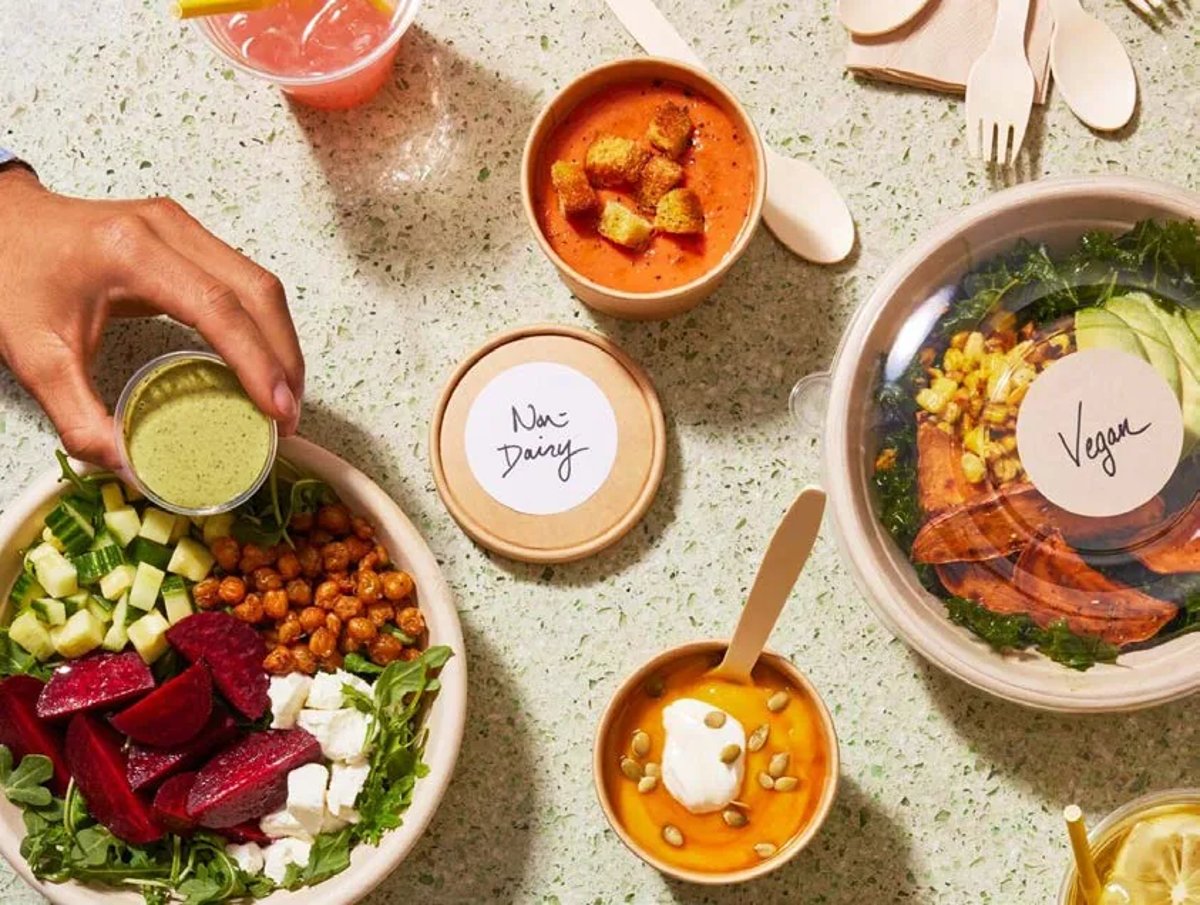
A dietary requirements list for office catering covers three kinds of need: medical (any food allergy or intolerance, including coeliac disease), religious (halal, kosher and fasting periods such as Ramadan) and personal (vegetarian, vegan and pescatarian). Each needs a different check, and the person with the requirement, not the organiser, should make the final choice of dish.
The checklist below sets out what to ask for each requirement and who confirms it. The menus further down show London restaurants on Ordit whose dishes carry the relevant marks, checked on 18 November 2026.

The dietary requirements checklist
Every requirement on the list needs one thing from the restaurant and one decision from the colleague. Ask colleagues about any food allergy or intolerance, not only the 14 regulated allergens: food businesses must declare those 14, and for any other ingredient the colleague checks with the restaurant before ordering, as the FSA's best practice guidance for non-prepacked food expects a business to say, where possible, whether other ingredients are present when asked. The table shows what to ask for in each case.
| Requirement | Type | What to look for or ask | Who confirms |
|---|---|---|---|
| Allergy or intolerance to one of the 14 regulated allergens | Medical | The restaurant's allergen information for each dish, which must be available before ordering and again at delivery | The restaurant; the colleague decides |
| Coeliac disease | Medical | Dishes the restaurant marks as containing no gluten, and how its kitchen handles cross-contact | The restaurant; the colleague decides |
| Allergy or intolerance to any other ingredient | Medical | Ask the restaurant before ordering whether the dish contains it, because only the 14 allergens must be declared | The restaurant; the colleague decides |
| Halal | Religious | Dishes the restaurant marks as halal, and its certification if the colleague needs it | The restaurant |
| Kosher | Religious | The restaurant's kosher status and certification | The restaurant |
| Fasting, such as Ramadan | Religious | An ordering window outside lunchtime, on the same budget | The employer's budget rules |
| Vegan | Personal | Dishes the restaurant marks as vegan; a vegan mark is not allergen information | The restaurant |
| Vegetarian or pescatarian | Personal | Dishes marked vegetarian, and the ingredients of fish dishes | The restaurant |
Allergen rules are covered in detail in Natasha's Law and office catering. The dates that change the plan each year, such as Ramadan and Diwali, are in the diversity and inclusion calendar 2027.
Who confirms that a dish suits a requirement
The restaurant confirms it, and the colleague decides. On Ordit, restaurants supply their own menus, including the allergen information and any dietary marks on each dish, and employees filter by vegetarian, vegan, gluten-free and more before choosing, as Ordit's HR and people teams page describes.
A mark on a menu has limits that the list should reflect:
- A vegan mark is not an allergen claim. The Food Standards Agency's advice for consumers says food labelled as vegan may pose a risk to people allergic to milk, eggs, crustaceans, fish or molluscs, and that "vegan" is not defined in food law.
- A halal or kosher mark is the restaurant's statement. A colleague who needs certification should see the restaurant's evidence, not a colleague's summary of it.
- A severe allergy needs a direct answer. Ordit's FAQ advises not ordering, or asking the team to put the question to the restaurant first, because no kitchen can guarantee a dish is free from an allergen.
London menus with marked dishes
These London restaurants on Ordit carry dietary marks on specific dishes. Prices checked on 18 November 2026 and may change; they are menu prices at the branch named, and other branches can differ.
| Restaurant (branch) | Example dish and menu price | Mark on the menu |
|---|---|---|
| Pali Kitchen (Bow Lane) | Charcoal Smoked Tandoori Chicken Rice Bowl, £12 | Halal |
| Pali Kitchen (Bow Lane) | Chana Masala Rice Bowl, £10.94 | Vegan, no gluten |
| Grain Mediterranean (272 High Holborn) | Aegean Power Bowl, £15.50 | Halal, no gluten |
| Grain Mediterranean (272 High Holborn) | Andalusian Roast, £9.95 | Vegan, no gluten |
| Farmer J (Orchard Place) | Lime Leaf Chicken Breast Skewer Fieldtray, £16.95 | Halal, no gluten, dairy free |
| Farmer J (Orchard Place) | Tofu Bowl, £9.95 | Vegan, no gluten |
| atis (Eastcheap) | Green Goddess bowl, £9 | Vegan |
Two restaurants describe themselves rather than marking each dish. Mildreds King's Cross describes its food as plant-based on its Ordit listing; only some dishes carry a vegan mark, so a vegan colleague checks the mark on the dish they choose. Reubens in Marylebone describes itself on its listing as a long-running kosher restaurant, but its dishes carry no individual kosher mark, so a colleague who keeps kosher asks the restaurant for its certification before ordering.
For colleagues who want to build their own meal, The Salad Project's Build Your Own Bowl (£9.95, Spitalfields) lets each person choose a base, four toppings and a dressing. Its listing advises customers with major allergies not to order from it, because the risk of cross-contamination is high, which is exactly the kind of restaurant statement the checklist asks people to read.
Fasting colleagues and Ramadan
A fasting colleague needs food at a different time, not a different benefit. During Ramadan, Muslims observing the fast do not eat or drink during daylight hours, and the Department of Health and Social Care's guidance on fasting advises at least two meals a day: a pre-dawn meal (suhoor) and a meal at dusk (iftar). A lunch-only meal budget does not help with either.
Ordit sets meal budgets by team, location, day or time of day, so an employer can open an optional evening ordering window for the weeks of Ramadan and close it afterwards. Ramadan 2027 is expected to begin on 8 February 2027, according to the projection published by Moon Sighting UK; the start depends on the sighting of the moon, so confirm the dates with the colleagues concerned. The same applies to the local sunset time, which changes through the month.
Group lunches with mixed dietary needs
A group lunch works for mixed dietary needs when each person chooses their own meal from the restaurants picked for the day. In an Ordit group order (see the group ordering guide for the full workflow), the organiser chooses the restaurants and a cutoff time, each colleague joins and orders for themselves, and the meals arrive together in the agreed delivery window, each labelled with the person's name. For teams that eat together on set in-office days, the meal budget rules for in-office days show how to set the day.
The name label gets the right meal to the right person. It is not allergen information: the ingredients, allergens and dietary marks are those the restaurant shows on its menu. Pairing two restaurants with different strengths, for example Pali Kitchen for halal dishes and atis for vegan bowls, widens the choice for everyone on the same delivery. Individual meals for days without a group order run through individual ordering.
Every meal to the person who chose it
Ordit runs its own delivery fleet and handles each group order from the restaurant to the office itself. Meals arrive accurate and labelled with the name of the colleague who ordered them, so a halal, vegan or no-gluten choice reaches the person who made it. Ordit's on-time delivery guarantee covers every delivery. Outside group orders, employees can order meals delivered in around 30 minutes. See how group orders work or book a demo.
Collecting dietary requirements without collecting personal data
The safest dietary requirements list is the one the employer never needs to keep. Data concerning health and data revealing religious beliefs are both special category data under UK GDPR, according to the Information Commissioner's Office, so a spreadsheet of who is coeliac or who keeps halal carries obligations.
Three practical rules follow:
- Let each employee choose their own meal from the restaurant's menu, so the requirement never leaves their own order.
- For a one-off catered event, ask attendees to opt in and collect only what the order needs.
- Delete the event list once the event is over, and never pass it to a supplier with names attached unless the attendee has agreed.
Ready to feed your team properly?
Join hundreds of London offices already using Ordit for individual meals, group orders, and catering.