
Is Your London Office Canteen Worth the Cost in 2026?
A London office canteen can cost £50,000 to £200,000 a year to run, and hybrid work has cut its footfall. How to work out cost per meal, and the alternatives.

A mid-sized London office canteen can cost £50,000 to £200,000 a year to run, before the capital cost of kitchen equipment (a planning bracket from Ordit's conversations with London facilities teams, not a survey). Hybrid work has cut the number of meals that fixed cost is spread over, so the real cost per meal has risen even where the budget has not.
This guide shows how to work out what a canteen meal really costs on busy and quiet days, what the research says about canteen use and satisfaction, and the four realistic alternatives for a London office.

What a London canteen actually costs
Running an on-site canteen in a Central London office means paying for kitchen infrastructure, catering staff, food procurement, hygiene compliance, waste disposal and facilities management. A mid-sized London canteen typically runs between £50,000 and £200,000 a year to operate, before the capital cost of kitchen equipment. That range comes from Ordit's own conversations with London facilities teams rather than a published survey, so treat it as a planning bracket and check it against your own P&L.
The published benchmark points the same way and higher: ezCater's 2026 Workplace Cafeteria Report found average operating costs for corporate cafeterias exceeding $1M a year, with 55% of organisations expecting those costs to rise in 2026. The survey covers the United States, so it shows the direction rather than a London figure.
When the whole workforce was in five days a week, that spend made sense: amortised across daily footfall, the cost per meal was reasonable. Hybrid work changed the divisor.
Hybrid work broke the canteen model
The same ezCater report, which surveyed 602 cafeteria decision makers and 1,000 on-site US employees in October 2025, found that while office attendance is rising, employees' use of cafeterias is not. More than half of organisations (51%) have already cut cafeteria operating hours, 51% of leaders say the cafeteria no longer justifies its overhead, and 36% of decision makers say companies should plan to decommission it, a 39% increase on the year before.
In London, where hybrid working is embedded across financial services, technology, consulting and law, facilities teams describe a consistent shape to Ordit: mid-week a well-resourced canteen might serve something like two-thirds of its pre-pandemic footfall, while Mondays and Fridays fall away sharply. Those are observations from client sites rather than survey data, but they match the pattern in US workplace order data: DoorDash's 2026 Workplace Meal Trends Report found workplace orders on Thursdays 20% higher than on Mondays.
The fixed cost of a canteen does not move with attendance. The kitchen, the staff and the compliance overhead cost the same whether 200 employees come in or 80.
How to calculate the real cost per canteen meal
The cost per canteen meal is the fixed annual cost divided by the meals actually served, plus the food and consumables cost of each plate. Footfall is the number that moves it.
Cost per meal = fixed annual cost ÷ meals served a year + food cost per plate
A hypothetical example, to replace with your own figures: a 150-person London office, three in-office days a week per person, 46 working weeks, a canteen with £120,000 a year of fixed cost (inside the planning bracket above), and an assumed £4 of food and consumables per plate.
| Measure | Busy year: 70% of those in eat in the canteen | Quiet year: 35% eat in the canteen |
|---|---|---|
| Person-days in the office | 150 × 3 × 46 = 20,700 | 20,700 |
| Meals served | 14,490 | 7,245 |
| Fixed cost per meal | £120,000 ÷ 14,490 = £8.28 | £120,000 ÷ 7,245 = £16.56 |
| Cost per meal with food | £12.28 | £20.56 |
The delivered alternatives have no fixed cost, so their cost per meal does not depend on footfall. On Ordit, using a hypothetical £12 lunch at menu price and the published fees (VAT included at 20%):
| Cost line | Group order: 20 people, one restaurant | Individual order |
|---|---|---|
| Lunch at menu price | £12.00 | £12.00 |
| Delivery per meal | £15 + VAT ÷ 20 = £0.90 | £3.75 + VAT = £4.50 |
| Service fee, 5% + VAT on the total monthly spend, food and delivery included | £0.77 | £0.99 |
| Cost per meal | about £13.67 | about £17.49 |
Read the comparison honestly: on a busy year a canteen plate can be cheaper than a delivered meal. The difference is that the canteen's fixed cost is paid whether anyone eats or not, so every quiet day raises the cost of every meal served. Fees are on the pricing page; Ordit charges no setup fee, subscription or platform fee.
What employees actually want
Employee satisfaction with canteen food is low and falling. The ezCater report found that only 48% of employees rate their cafeteria food as good or excellent, against 87% of the leaders running those cafeterias. Employee satisfaction fell 12% year on year, and 76% of employees said restaurant food is tastier than cafeteria food. Employees are not just eating at the canteen less: many choose not to, even when they are in the building.
The restaurant-powered alternative
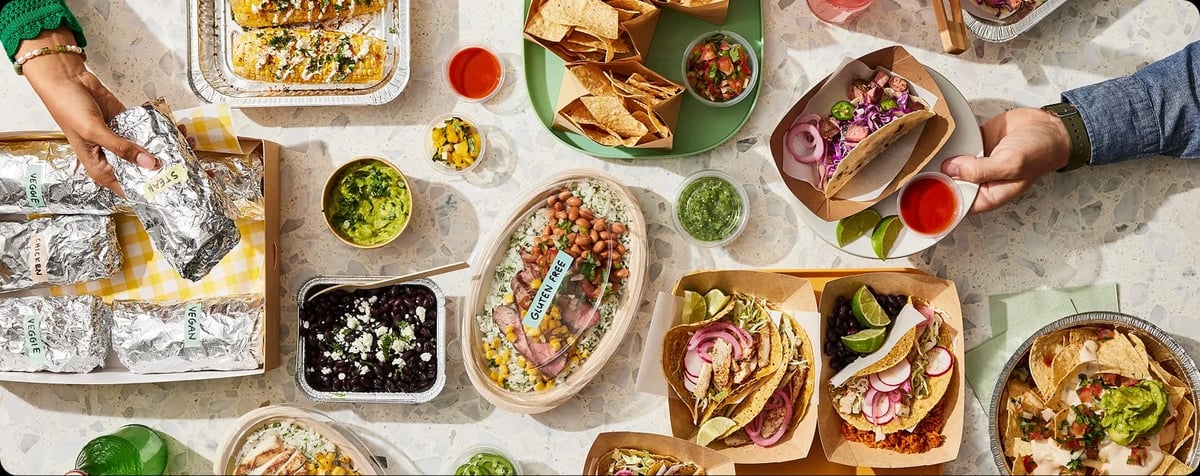
A flexible meal programme lets employees order from partner restaurants instead of a central kitchen: delivered to the office as a group at a set time, or individually through the day. There is no kitchen to run and no catering staff, and food is ordered only for the people who are in.
Ordit is a London version of this model. Its 300+ restaurants and caterers include names employees already choose, such as Farmer J, Coco di Mama and The Salad Project. On a group order each person picks their own meal from a full menu, and the meals arrive together in the chosen 30-minute slot, labelled by name.
The cost model is different, though not free. Meals are charged at menu price, with no markup. Delivery is £15 + VAT per restaurant on a group order, or £3.75 + VAT for an individual order. A 5% + VAT service fee is applied once to the total monthly spend, food and delivery included, on the invoice rather than per order. There is no setup fee, subscription, platform fee, minimum spend or lock-in, and no kitchen or catering staff to pay for.
The office attendance effect
Food is also a lever for bringing people in on hybrid days. In ezCater's report, 80% of decision makers agreed that meals from local restaurants encourage office attendance more effectively than cafeteria food. DoorDash's report, which analysed workplace meal orders placed in 2025 by more than 700 companies, found large team-sized orders growing 30% faster than regular ordering year on year, peaking in quarterly planning months such as March, September and December.
A canteen on reduced hours with a limited menu does not produce the same pull. A meal programme with real restaurant choice, on the days people are in, can.
The practical question
This is not an argument that every London office canteen should close. Some environments, such as large law firm kitchens, trading floor catering operations and campus-style offices, still have the steady headcount and security requirements that make an on-site facility worthwhile.
But for many mid-market London businesses, such as a 200-person professional services firm in the City or a 150-person tech company in Shoreditch, the canteen is a significant fixed cost against a benefit fewer employees use. If the numbers have not been run recently, run them on actual footfall: the fixed cost per meal served on hybrid days tends to look different from the figure on the canteen P&L. The complete guide to employee meal programmes covers the wider choice of programme formats, and measuring programme ROI shows how to judge the change after a switch.
Alternatives to a staff canteen
A London employer replacing a staff canteen has four realistic routes. They are not exclusive, and many offices combine two.
A subsidised canteen run by a contract caterer. The caterer carries the kitchen and the staff, and the employer pays a management fee or a subsidy per head. The overhead largely remains, so this suits large sites with a steady daily headcount.
A daily meal allowance spent with delivery restaurants. Each person orders from a partner restaurant within a set budget through individual ordering, for example a build-your-own bowl from The Salad Project or atis. It suits mixed teams on different hybrid days, because nothing is ordered for people who are not in. See how an employee meal programme works.
Scheduled group orders. One order per team or per day, delivered together at a fixed time, with delivery at £15 + VAT per restaurant in the order. The restaurants can rotate, for example pizzas from PizzaExpress one week and a fieldtray from Farmer J the next. It suits offices with fixed in-office days. See group orders for the office.
A shared lunch without an on-site kitchen
Ordit runs its own delivery fleet and controls every order from the restaurant to the office, so a scheduled team lunch arrives without a kitchen or catering staff on site. Each meal arrives accurate and labelled with the colleague's name. Every order on Ordit is covered by the on-time delivery guarantee. For individual lunches, employees can order meals delivered in around 30 minutes. See group orders or book a demo.
Catering on the days the office is full. A workplace canteen sits half empty on quiet days but is still staffed, whereas catering can be booked only when attendance peaks, for example a feast for 10 to 12 people from atis catering. On Ordit, Tuesday to Thursday carry about 71% of orders and Friday under 10% (orders, August to early November 2026). See office catering for team lunches and events, and the office catering budget guide for planning peak days across the year.
| Option | What the employer pays for | Suits |
|---|---|---|
| Subsidised canteen (contract caterer) | Kitchen, staff and a per-head subsidy | Large sites with steady daily headcount |
| Daily meal allowance | Meals ordered, up to a budget per person | Hybrid teams on varied days |
| Scheduled group orders | Meals plus delivery per restaurant | Fixed in-office days |
| Catering on busy days | Catering orders for chosen dates | Peak days and events |
Whichever route an employer chooses, the tax treatment comes first: the workplace meals exemption has conditions, set out in the employee meal benefits tax guide.
What would a meal programme cost for your office?
Ordit works with HR, facilities and finance teams across London to build meal programmes that replace or complement a canteen, with no setup fee or lock-in, and integration with SAP Concur, Workday and single sign-on. You pay for the meals your team orders, the delivery fee and a 5% + VAT service fee on the monthly total. Teams can self-register and order the same day; single sign-on and an employee feed take one to two weeks including testing. For an estimate based on your own footfall, talk to the team.
Ready to feed your team properly?
Join hundreds of London offices already using Ordit for individual meals, group orders, and catering.