
Natasha's Law and office catering: PPDS rules for UK offices
Natasha's Law covers PPDS food. Office catering ordered online follows other allergen rules: information before purchase and at delivery. A UK buyer's guide.
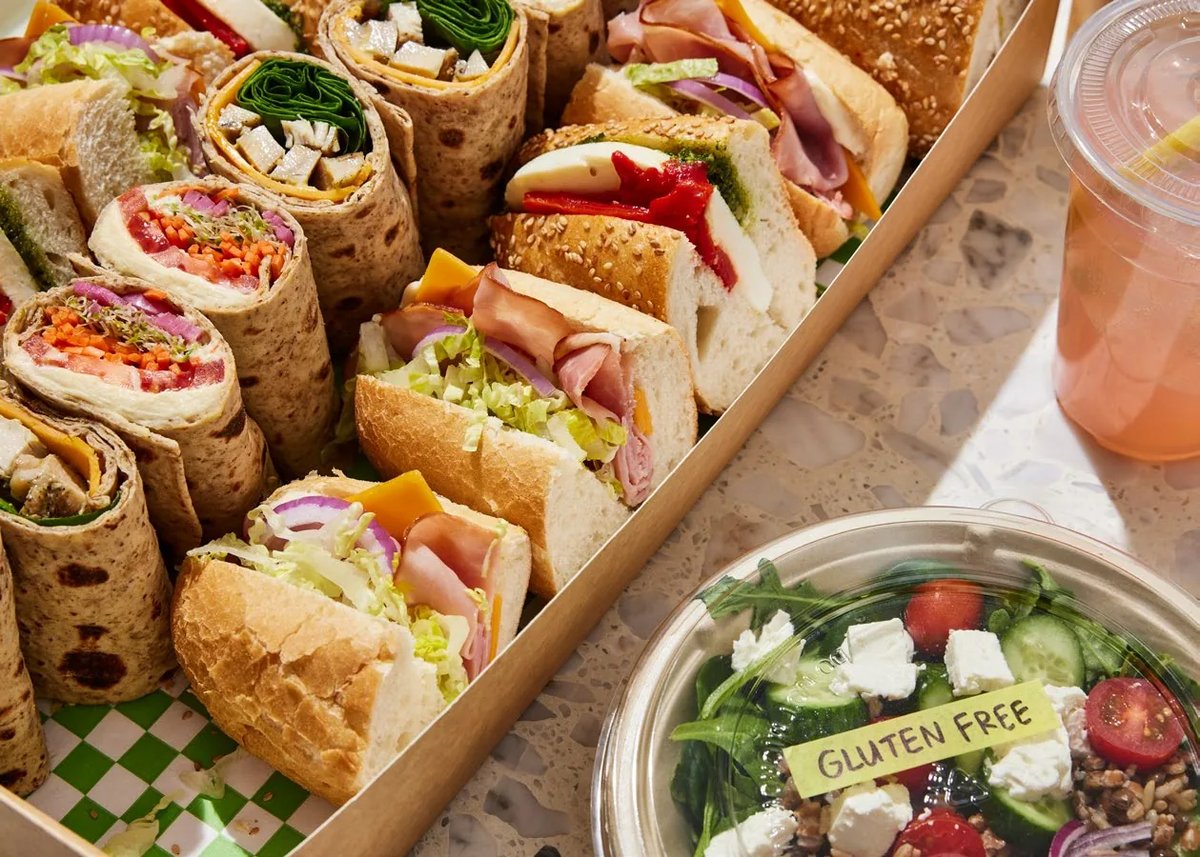
Natasha's Law is the allergen labelling rule for food prepacked for direct sale (PPDS): since 1 October 2021, food packed on the premises where it is sold, before the customer chooses it, must carry its name and a full ingredients list with the 14 allergens emphasised. Office catering ordered online is usually not PPDS; it follows the distance-selling rules instead, with allergen information required before purchase and again at delivery.
Somebody in most offices orders lunch for other people: an office manager, an EA, a facilities lead. That person is handling allergen information on behalf of colleagues whose medical history they do not know. The Food Standards Agency's Patterns and Prevalence of Adult Food Allergy report, published in May 2024, estimated that around 6% of UK adults have a clinically confirmed food allergy, about 2.4 million people. This guide sets out which rule applies to which kind of office order, and what to ask a supplier.
What is PPDS food?
PPDS food is food packaged at the same place it is offered or sold to consumers, before the consumer orders or selects it. That is the definition in the Food Standards Agency's introduction to allergen labelling for PPDS food, which applies in England, Wales and Northern Ireland. In Scotland, Food Standards Scotland states the same requirement: since 1 October 2021, food businesses in Scotland and the rest of the UK must label prepacked food made on-site with the product name and a full list of ingredients.
The FSA's examples of PPDS food include sandwiches and bakery products packed on site before a customer selects them, and fast food packed before it is ordered, such as a burger under a hot lamp. Its examples of food that is not PPDS include food that is not in packaging, food packaged after the customer orders it, and food packed by one business and supplied to another, which is "prepacked" food and needs full labelling of its own.
What decides the category is where, when and by whom the food was packed, who sells it, and whether the sale is at a distance. The time of day the food was made never decides it.
| How the food reaches the office | Category | Allergen information required |
|---|---|---|
| Packed by the business on the premises it sells from, before the customer chose it, and bought in person | PPDS | A label with the name of the food and a full ingredients list, the 14 allergens emphasised |
| Packed by one business and supplied to another business to sell | Prepacked | Full prepacked labelling, including the allergens |
| Made or packed after the customer ordered it, or served loose | Non-prepacked | Allergen information in writing, or verbally with a clear written notice telling customers to ask staff |
| Ordered in advance by the company for its staff | Non-prepacked | Allergen information to anyone eating the food, orally or in writing |
| Ordered online or by phone for delivery | Distance selling | Allergen information before the purchase is completed and when the food is delivered |
Sources: FSA, introduction to allergen labelling for PPDS food and PPDS guidance for event caterers, checked on 18 November 2026; for verbal information, the FSA's allergen technical guidance and allergen guidance for food businesses.
Natasha's Law and office catering
Most office catering falls outside Natasha's Law, because it is ordered in advance and at a distance. The FSA's guidance for event caterers, which describes the PPDS rules as "also known as Natasha's Law", addresses this case directly: food ordered before an event by a person or organisation on behalf of other individuals is non-prepacked food, and the PPDS rules do not apply to food sold by distance selling, such as over the phone or online.
The same guidance notes that PPDS does not include food packaged in larger quantities, such as platters of sandwiches covered in clingfilm. A specific meal ordered in advance for an attendee with a dietary requirement is not PPDS either. Mandatory allergen information is still required in every one of these cases; only the form changes.
Natasha's Law does matter to an office when food is bought in person from a shop or café that packed it on site, or when a caterer sets out packaged items on the day for attendees to choose from. In that case each item needs the full PPDS label.
Allergen information for online orders: before purchase and at delivery
For food sold at a distance, allergen information must be available at two points: before the purchase of the food is completed, and when the food is delivered. The FSA's PPDS introduction says the first can be in writing, such as on a website or menu, or given orally, such as by phone; the second can be in writing, such as allergen stickers or an enclosed menu, or given orally.
The FSA's best practice guidance for non-prepacked food, published on 24 February 2025, goes further for online and phone orders:
- Written allergen information should be available both before the food is ordered and when it is delivered.
- Online, it should be on the main menu or ideally no more than "one click away".
- Where a business sells through a third-party website, customers should be told clearly where to find the allergen information before they order.
- Customisations should be indicated on delivery, and the customer told if cross-contamination in transit is a risk.
- For pre-ordered meals, such as a large group booking, allergen information should also be discussed with individuals on the day, before the food is served, because ingredients could have changed since the order.
That guidance is best practice, not law: the document says businesses are not required by law to follow it, and that the minimum legal requirement to provide information by any means has not changed.
The 14 allergens
UK food law names 14 allergens that food businesses must declare. The FSA's allergen guidance for food businesses lists them as celery; cereals containing gluten (such as wheat, rye, barley and oats); crustaceans; eggs; fish; lupin; milk; molluscs; mustard; peanuts; sesame; soybeans; sulphur dioxide and sulphites (above ten parts per million); and tree nuts (such as almonds, hazelnuts, walnuts, brazil nuts, cashews, pecans, pistachios and macadamia nuts).
That list is what a supplier's allergen information has to cover for every item an office can order.
"May contain" labels
A "may contain" label is voluntary. The FSA's advice for consumers says there is no specific legal requirement for food businesses to label food "may contain", but food must be safe to eat and information must be provided to help people with allergies make safe choices.
For a buyer, the useful question is not whether the warning is present but what it rests on. Ask the supplier which allergens the warning refers to and why the risk cannot be removed in its kitchen. A supplier that can explain this is giving colleagues usable information.
Where office catering goes wrong
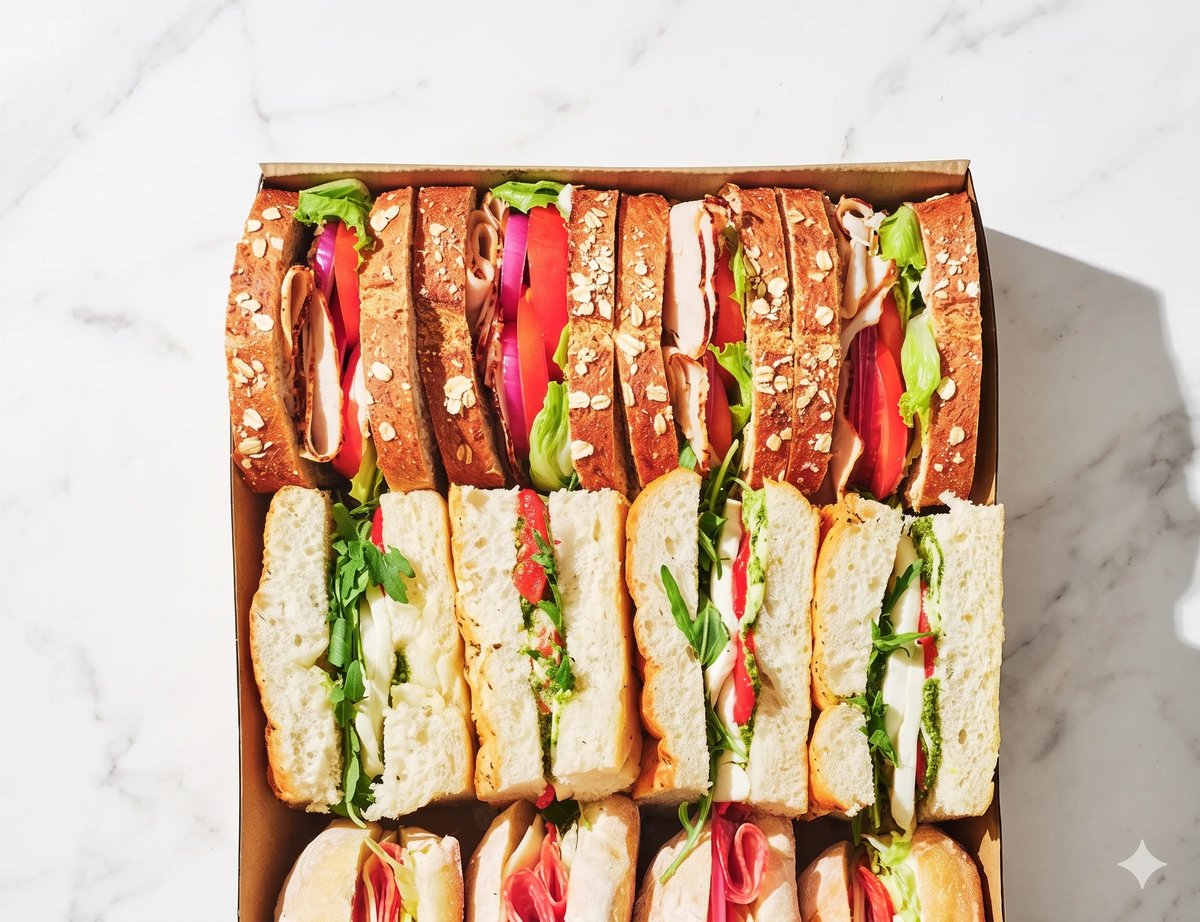
Office catering usually goes wrong at a handover rather than in the kitchen. Four patterns come up repeatedly.
The platter problem. Shared trays are the hardest format to manage: serving utensils move between dishes, and guests handle food. Separate boxed meals reduce that contact at the table. They do not remove cross-contact in the kitchen, which only the restaurant can describe.
The substitution nobody flagged. A kitchen runs out of an ingredient and substitutes it. The allergen information published with the menu is now wrong for that dish. The FSA's best practice guidance asks for customisations to be indicated on delivery, which is why a substitution should come with written confirmation before the dish is handed out.
The name label mistaken for allergen information. A group-order meal labelled with a colleague's name tells reception whose meal it is. It says nothing about ingredients. The allergen information is the restaurant's, published with the menu before ordering, and it must be available again at delivery.
The multi-vendor drop. Several suppliers deliver to one meeting, each presenting allergen information differently, and the person laying the table reconciles them by eye. One ordering route with the information shown per dish removes that step.
The handover at reception
Ordit runs its own delivery fleet, so a lunch travels under Ordit's control from the restaurant's counter to the office reception. Group-order meals arrive accurate and labelled with each colleague's name, which gets the right box to the right person, while the ingredients and allergens remain those the restaurant published on its menu. Every delivery is covered by Ordit's on-time delivery guarantee. Employees can also order meals delivered in around 30 minutes. See how group orders work or book a demo.
What to ask a catering supplier
Eight questions cover the rules above. A supplier running a serious operation answers all of them in writing.
- What is the FSA food hygiene rating of each kitchen that will prepare our orders?
- Where is the allergen information for each item shown before we order, and is it in writing?
- What allergen information comes with the delivery: stickers, an enclosed menu or a sheet?
- If a dish changes or an ingredient is substituted, how will we be told before the food is served?
- Are any items packed on your premises before ordering and sold to us in person, and if so, do they carry a full PPDS label?
- Which "may contain" warnings do you use, and what risk assessment is behind them?
- Can each employee read the allergen information and choose for themselves, rather than through a colleague?
- Who do we contact on the day with an allergen question, and how quickly do they answer?
On Route Catering's menu and atis Catering's Eastcheap menu, most dishes list the allergens the caterer has declared, which gives an organiser something concrete to check against the questions above (menus checked on 18 November 2026).
How ordering through Ordit fits these rules
On Ordit, restaurants supply their own menus and allergen information, and each employee chooses a meal from them. Ordit's FAQ states that ingredient and allergen information is shown as provided by each vendor, that employees can filter by dietary requirement or allergy before ordering, and that, because no kitchen can guarantee a dish is free from a particular allergen, Ordit's advice for a severe allergy is not to order, or to contact the team first so the question can be put to the restaurant.
Restaurants also state their own limits. The listing of The Salad Project on Ordit, for example, advises customers with major allergies not to order from it because the risk of cross-contamination is high. On atis's Eastcheap menu, a bowl such as the Green Goddess lists nuts, soya and sulphites among its declared allergens (menu checked on 18 November 2026).
That design keeps the decision with the person who has the allergy, using the restaurant's information. Individual ordering and group orders both work this way. For larger events, Ordit catering runs on the same partner menus.
The practical version of all this: reduce the number of people who make an allergen decision on someone else's behalf, and make sure the restaurant's written information is in front of the person eating, both before the order and at the door. The wider picture on dietary needs is in the dietary requirements list for office catering, the formats and planning steps are in the office catering in London guide, and supplier selection is covered in how to choose an office catering company in London.
This article is general guidance for UK employers, current as of November 2026. It is not legal advice. Allergen law is enforced by local authorities and the position can change; check the FSA's current guidance before relying on it.
Ready to feed your team properly?
Join hundreds of London offices already using Ordit for individual meals, group orders, and catering.